
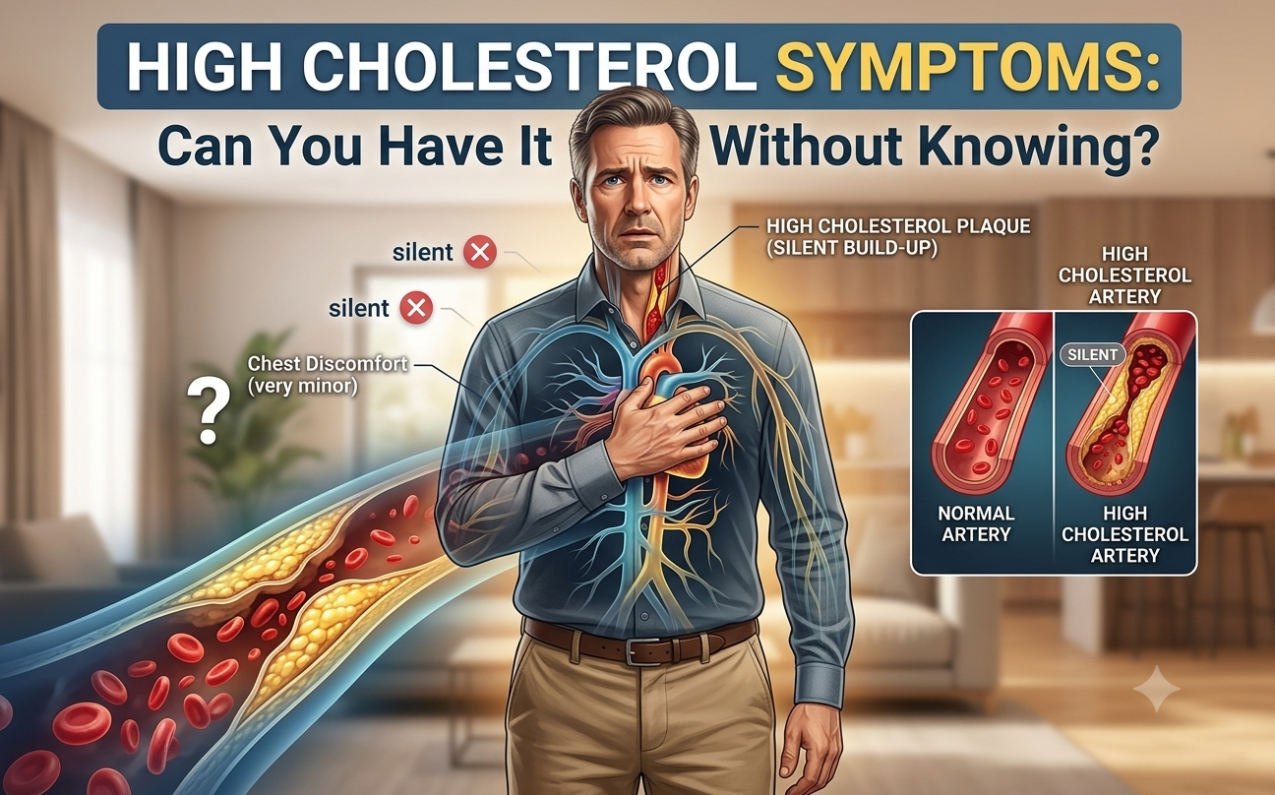
This is a question we are asked almost every week in the OPD: “Doctor, I feel absolutely fine, so how can my cholesterol be high?” This is really one of the most frequent questions people ask. Many believe that if their health is poor, they should experience pain or discomfort. But that’s not how cholesterol functions. It can build up silently, and by the time it begins showing clear signs, it may have already been affecting the body for years.
We’ve seen this many times in our years of practice – people come in for a routine check up, sometimes just for a fitness certificate or an insurance test, and their reports show high cholesterol levels that completely surprise them. No chest pain, no breathlessness, nothing to worry about. A number on a report that tells a different story to how they felt.
Why Cholesterol Stays Silent
Cholesterol is not like a fever or an infection. It does not make your body react right away. The changes happen slowly. Extra cholesterol in the blood can start building up on the walls of your arteries over months and years. This can slowly make the space for blood flow narrower. Since the change happens gradually, your body adjusts to it, and you may not notice anything.
You can feel completely normal until the narrowing becomes serious enough to cause a real problem. By that point, it may have already become a bigger health concern.
This is exactly why we tell our patients- do not wait to feel something before getting checked. Cholesterol is one of those conditions where the absence of symptoms means nothing about the absence of risk.
The Signs People Often Miss or Ignore
While high cholesterol mostly stays silent, there are some indirect signs that people brush aside without connecting the dots:
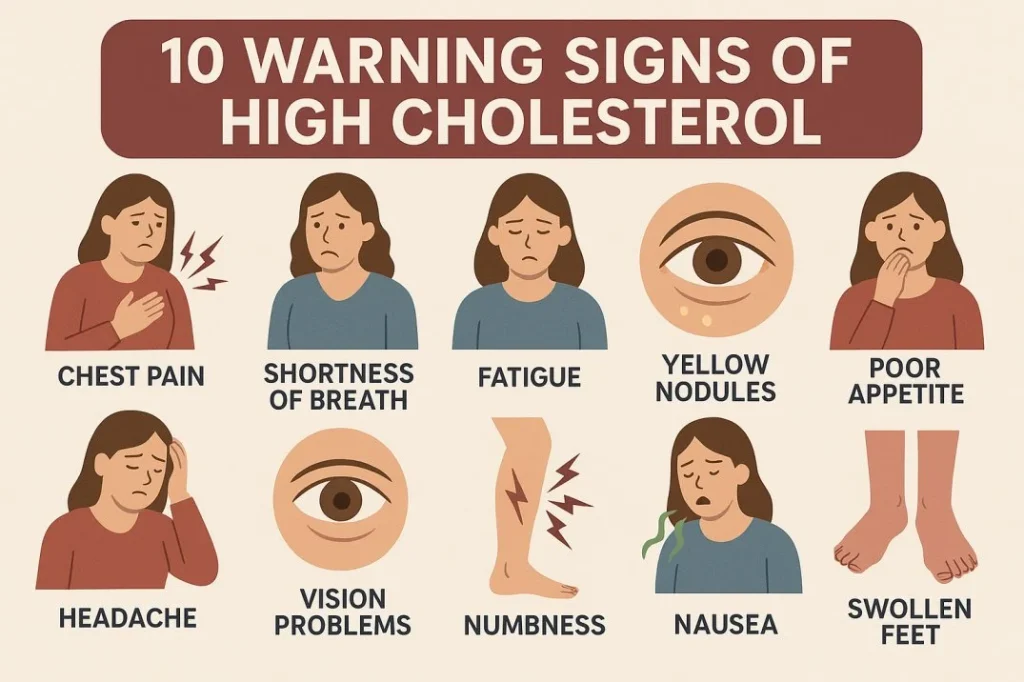
- Getting tired faster than usual during normal daily activity like climbing stairs
- Slight heaviness or discomfort in the chest during exertion, which goes away with rest
- Numbness or coldness in the legs and feet, especially noticed more than before
- Small yellowish deposits near the eyes or on the skin, which many people mistake for just a skin issue
- Family history of heart disease, which people often mention only when asked directly, not on their own
None of these are guaranteed signs of high cholesterol. But we have noticed that when patients look back after their diagnosis, many of them recall one or two of these signs that they had ignored for months, thinking it was just tiredness or age catching up.
Our Honest Observation From Years of Practice
Something we have observed closely at SRPM Health Care- people in their thirties and forties are showing up with cholesterol related concerns far more than a decade ago. The lifestyle has changed, food habits have changed, and physical movement has reduced. What used to be a concern mainly for people above fifty is now something we discuss with much younger patients too.
Another thing we tell our patients honestly- a normal weight does not mean normal cholesterol. We have seen thin, fit looking individuals with cholesterol numbers that surprised even them. Body shape is not a reliable indicator here. The only way to know for sure is a blood test, not a mirror.
Why Waiting for Symptoms Is a Risky Approach
If you wait for clear symptoms before checking your cholesterol, you are essentially waiting for the arteries to narrow enough to cause a noticeable problem. That is not early detection, that is late detection. The whole value of a cholesterol test lies in catching the issue before it reaches that stage.
We often explain it this way to our patients- think of it like a slow leak in a tyre. You do not wait for the tyre to go completely flat before checking the air. You check early, you correct early, and you avoid a bigger problem later. Cholesterol works on the same logic.
Read Also: Knee Pain Causes and Treatment
When Should You Get Checked
There is no need to wait for a doctor to specifically recommend it if you fall into any of these situations:
- You are above thirty and have never had a lipid profile test done
- There is a history of heart disease or diabetes in your family
- Your daily routine involves very little physical movement
- You often eat outside food or packaged food more than home cooked meals
- You smoke or consume alcohol regularly
For anyone searching for proper cardiology guidance, a good starting point is a consultation with a cardiology team who can explain your numbers clearly and not just hand you a report. This is something we focus on strongly at SRPM Health Care, especially for people looking for a cardiology hospital in Siddharth Vihar who want their reports explained in simple terms, not just medical language they cannot follow.
A Simple Habit We Recommend to Every Patient
Get your lipid profile checked once a year after the age of thirty, even if you feel completely fine. Pair this with a basic conversation with your doctor about your family history and daily habits. This combination catches problems early, when correction is simple- through diet and activity changes- rather than late, when medication and bigger interventions become necessary.
FAQ
1. Is it possible for someone in their 20s to have high cholesterol?
Yes, it can happen, though less common in younger people. You can have high cholesterol even at a young age if you have a family history of it, eat unhealthy foods, or don’t get enough physical activity. Just because you’re young doesn’t mean you can skip your cholesterol check-up.
2. My cholesterol is high, but I feel OK. Is it still a serious problem?
Yes. Feeling normal does not mean the arteries are not affected. The seriousness of cholesterol is judged through blood test numbers and overall heart health, not through how a person feels day to day.
3. Are the yellow deposits around the eyes always cholesterol related?
Not all the time, but it is a need to get them examined. Xanthelasma, these yellow deposits, are more common in people with high cholesterol. So better to get a proper cholesterol test than to think it is just a skin problem.
4. If I have a family history of high cholesterol, will I have high cholesterol?
No, it doesn’t guarantee it, but it does increase the chances. One reason is genetics , but your daily routine like diet and activity still plays a major role .
5. How often should a healthy adult have his cholesterol checked?
Who reaches thirty years old. He does it once every year one time, even without any symptoms. If there is a family history of heart disease, your doctor may suggest checking more frequently based on your individual case.