
Another common question people ask when they are not feeling well is, “Which treatment should I take?
Many families in India are aware of both allopathic and Homoeopathic Medicine. One approach will resonate with some, and the other approach will suit others at different points in life based on their health needs.
Contrarian, still the distinction between these two systems is quite confusing.
Returning to the context of Ms B and her question about what is health, we healthcare professionals often hear patients say they want to know the basic information before deciding on any health-related intervention. It is NOT to compare one system with another. However, it is beneficial to comprehend how each method functions and where these methods are most commonly employed.
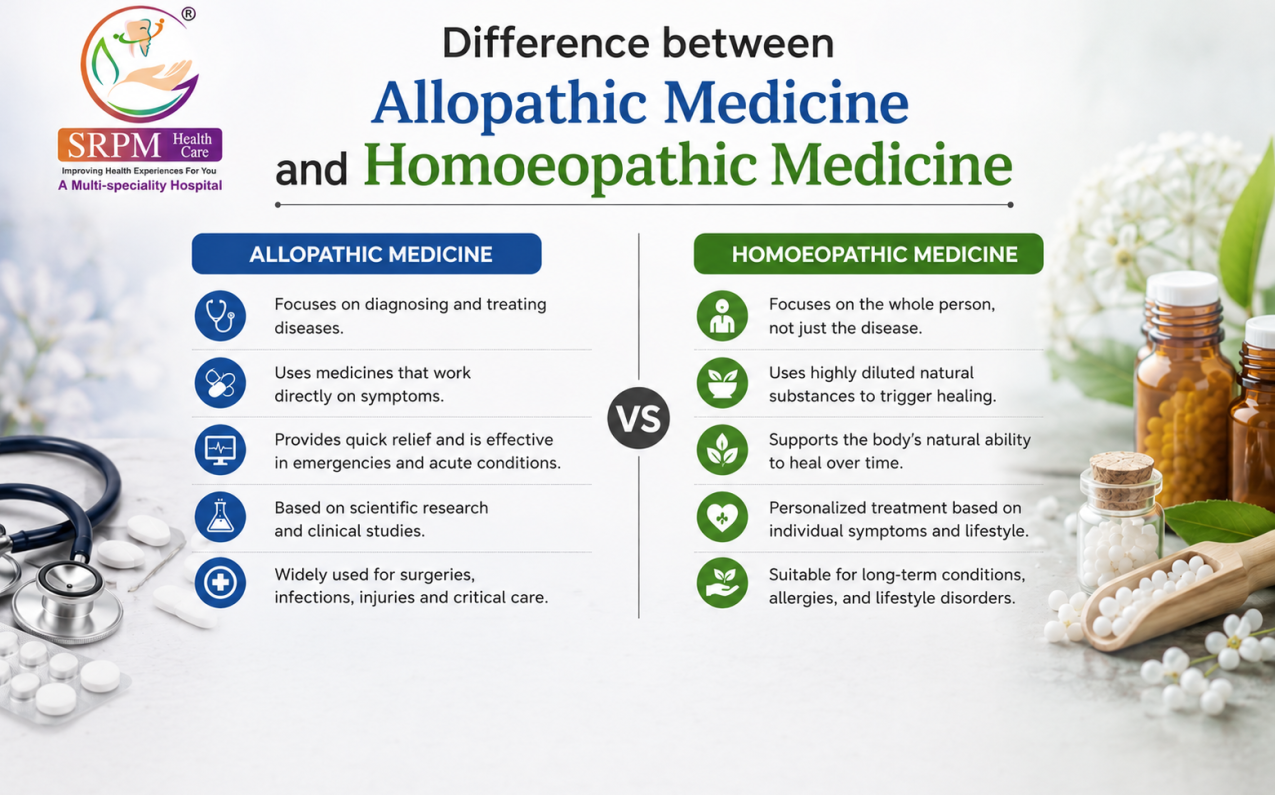
Understanding Allopathic Medicine
Allopathic medicine is the healthcare system that most individuals know today.
If you go to the hospital for fever, infection, injury, surgery or any emergency treatment, themost likely will be getting an allopathic care.
This system is important for disease detection on the basis of tests, medical examinations and scientific assessment. Management frequently consists of drugs, procedures, or surgical operations aiming to treat precise symptoms and medical situations.
For example:
- Antibiotics can be prescribed for bacterial infections.
- Pain relievers can be used for pain relief.
- Surgical options can be suggested when indicated.
While Allopathic is essential for emergency care, trauma rescue and other serious medical conditions that require immediate treatment, it misses out on a lot in the field of chronic disease.
Read Also: Top 5 Urology Hospitals in Indirapuram
Understanding Homoeopathic Medicine
Homoeopathic Medicine has its own philosophy.
Homeopathy does not focus simply on a disease or symptom; it focuses on the ‘totality’ of the individual.
Homoeopathic doctor takes time to understand by:

- Physical symptoms
- Emotional well-being
- Lifestyle habits
- Personal health history
- Individual responses to illness
The goal is to know the individual more broadly rather than simply treating one symptom.
Such an approach has contributed to the growing popularity of homeopathy and evaporated the sense of individualized care.
The Main Difference in Method
Perhaps the largest difference in regards to how each system approaches health.
Allopathic Medicine
You are trained on one disease or condition with an emphasis on diagnosis and treatment.
Example:
When a person has a fever, the treatment usually tries to diagnose what is causing the fever and treat it.
Homoeopathic Medicine
The focus is not just on the disease but also on their physical and emotional well-being.
Example:
For symptoms that are similar in two people, homeopathic medicines differ because of variable symptom profiles between the patients and history.
It is this individualized approach that causes many individuals to seek a Homoeopathic doctor for long-standing health conditions.
Consultation Style Can Be Different
Most patients can feel the difference in their first appointment.
In Allopathic Practice
Appointments are often focused on:
- Symptoms
- Medical examination
- Diagnostic tests
- Treatment plan
In Homeopathy
Consultations may involve discussions about:
- Sleep patterns
- Stress levels
- Food preferences
- Lifestyle habits
- Emotional health
It is for getting a larger picture of the patient.
Treatment Duration
How long you will need to be treated depends on the disease and medical care path you’re taking.
With urgent complications including infections, accidental injuries and emergency situation management, allopathic treatment typically provides instant clinical administration.
Homeopathy is often sought by those who want a slow and personalized healing process with their health issues.
Each clinically patient is different and treatment should always be made per healthcare professional.
The Importance of Proper Diagnosis
Irrespective of the treatment mechanism proper diagnosis is imperative.
However, many symptoms look alike but have fundamentally different underlying causes.
And so it’s necessary to consult qualified healthcare providers.
No matter if you go to a general doctor, specialist or even with a Homoeopathy hospital first knowing the root of the problem should always come first in priority.
Common Misunderstandings
MYTH 1: Homeopathy and Allopathy Are Not Refined
A lot of people think they have to pick only one system.
In reality, health care choices are based on an individualised approach to circumstances taking into account comorbidities and medical history and/or physician recommendations.
MYTH 2: Allopathic Medicine Only Addresses Symptoms
As a practising physician, I know that modern medicine is about diagnosis and treatment based on evidence. It treats symptoms and underlying causes based on the condition.
MYTH 3: Homeopathy is Only for Small Problems
Homeopathy is sought out by those who want tailored health advice, covering a broad scope of ailments.
Which One Is Better?
This is probably the most frequently asked question.
This is a frank answer, but more often than not, medicine is not about picking sides.
Each medical system has its own role and functionality.
What matters most is:
- Proper diagnosis
- Qualified healthcare professionals
- Patient safety
Find out MoreInformationRemember, it all starts with understanding your condition and getting the right medical advice.
Why Professional Guidance Matters
There is a great deal of health information on the Internet, with self-diagnosis often causing confusion.
The health needs of each patient varies from the other.
As such, a qualified Homoeopathic doctor or medical professional can assist in assessing signs and symptoms, consider the health history, and refer patients to relevant care plans.
Final Thoughts
The key difference in Allopathic medicine and Homoeopathic Medicine is right there in their philosophy and approach to health care. Allopathy primarily tends to identify and treat diseases whereas homeopathy tries to understand the individual as a whole.
They both have a place in discussions about health care.
The primary step is not which label you choose but how you indeed take enlightened decisions on your health, backed by specialist recommendations and correct diagnoses.
Awareness, understanding and timely consultation is the beginning of good health.
Frequently Asked Questions
1. What is Homoeopathic Medicine?
Homoeopathic Medicine is an alternative form of treatment through which the doctor understands the patient as a whole (physically, lifestyle-wise, emotionally) and only then prescribes medicines.
2. Who should consult a Homoeopathic doctor?
Those who want to know if homoeopathy can work for their health issues can consult a qualified Homoeopathic doctor.
3. What happens in a homoeopathy consultation?
Consultations are typically made to address symptoms, lifestyle including details about home, family and work, comprehensive health history, sleep patterns, understanding the stress levels in life at this point of time along with well-being.
4. Why select a qualified Homoeopathy hospital?
A reputable Homoeopathy hospital ensures systematic medical care, seasoned practitioners and a professional atmosphere for patient treatment.